


15 Jun How to Hold a Padel Racket? 5 Grip Types & Beginner Tips
The best way to hold a padel racket is with a continental grip, where your hand sits as if you are shaking hands with the racket, giving you better control, faster reactions, and easier shot changes during a rally.
Learning how to hold a padel racket properly is one of the most important beginner padel tips because your grip affects everything, from your forehand and backhand to volleys, serves, and smashes.
Many new players focus on power first, but grip is what builds control and consistency.
At Deuce Padel, we help players across the UK improve their padel technique through expert coaching, premium indoor courts, and a welcoming environment for players of all levels.
Why Is Your Padel Grip Important?
According to the International Padel Federation (FIP), good technique and positioning are key parts of building a stronger all-round padel game.
Many beginners focus on hitting harder, but in padel, the way you hold the racket matters far more than most people realise.
Your grip controls the angle of the racket face, which directly affects how cleanly you strike the ball, how much control you have, and how quickly you can react.
A strong padel grip helps you:
- Play cleaner and more accurate shots
- Keep better control during rallies
- React faster in quick net exchanges
- Switch smoothly between forehand and backhand
- Defend difficult balls off the glass with more confidence
Because padel is mainly played in doubles, the game moves quickly and gives you less time to prepare than in sports like tennis.
That is why having the correct grip is so important.
The Basic Way to Hold a Padel Racket
If you are still learning about padel tennis, building the right grip early can make the rest of your technique much easier to learn.
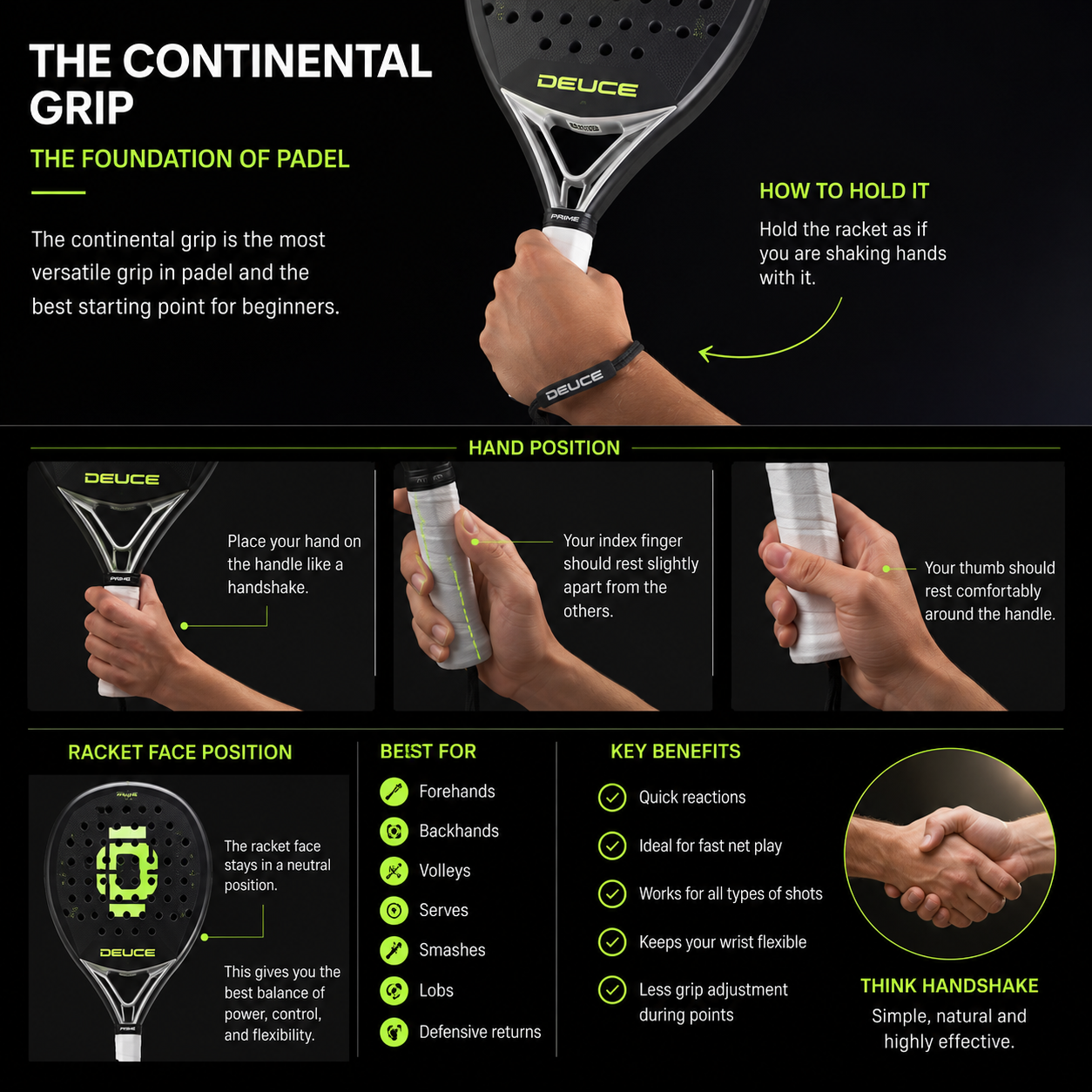
One of the simplest ways to find the correct padel grip is to use the handshake technique.
- Place your hand on the handle as though you are greeting someone, which naturally sets your racket into the continental grip.
- Keep your index finger slightly separated for extra feel, while your thumb wraps around the handle in a relaxed position.
This grip creates a strong mix of control and power.
5 Padel Grip Types Every Beginner Should Know
When learning how to hold a padel racket, understanding grip types is just as important as learning your shots.
Your grip affects the angle of the racket face, the amount of control you have, how quickly you can react, and even how much power you can create.
Unlike some racket sports where players often switch grips, padel is much faster and leaves less time between shots.
That is why most players stick with one main grip and make only small adjustments depending on the situation.
Knowing these grips helps you understand why certain shots feel easier, harder, stronger, or more controlled.
1- The Continental Grip
The continental grip is the foundation of almost every shot in padel and is often the first grip beginners are taught.
The easiest way to find it is to hold the racket as if you were shaking hands with it. This places your hand in a neutral position, which keeps the racket face balanced and ready for different shots.
This grip is so important because it allows you to move quickly between attacking and defending without changing your hand position too much.
It works well for forehands, backhands, volleys, serves, smashes, lobs, and defensive returns.
The biggest advantage of the continental grip is speed. In padel, especially at the net, points move fast. If you have to keep changing your grip, you lose valuable time. The continental grip solves that problem by giving you one reliable position for almost everything.
It also helps keep your wrist flexible, which is important for softer shots like drop volleys or controlled lobs.
This is why coaches usually tell beginners to master this grip before experimenting with others.
2- Forehand Grip
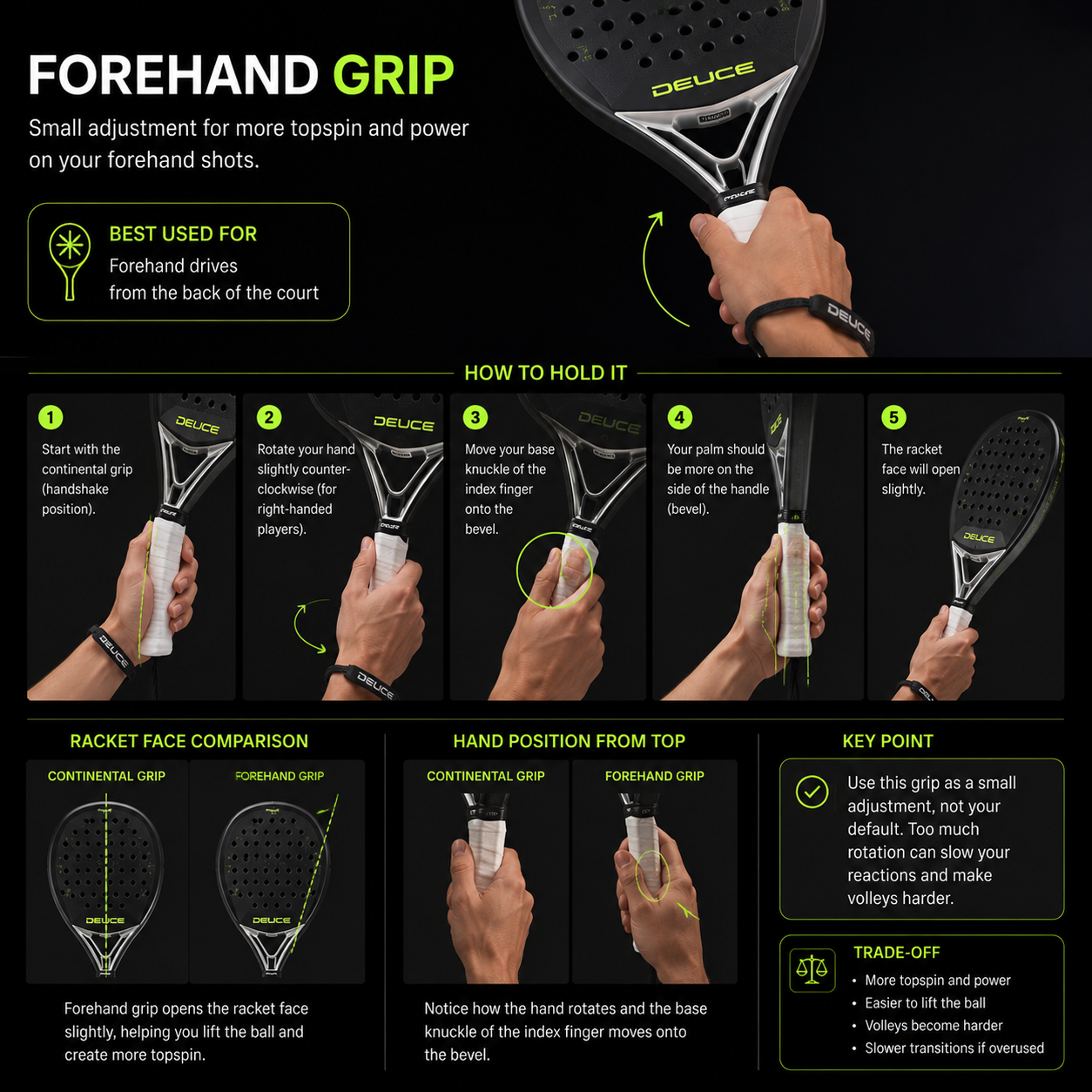
The forehand grip is a small variation in which the hand rotates slightly under the handle, opening the racket face slightly more.
This grip can help generate extra topspin and power on forehand drives from the back of the court.
Because the racket face opens more naturally, it can feel easier to lift the ball and create more aggressive shots.
But there is a trade-off.
Using too much forehand grip in padel can make volleys harder and slow your transitions. Unlike tennis, where bigger grip changes are normal, padel rewards quick reactions more than heavy spin.
For beginners, this grip should be used as a small adjustment, not as your default.
3- Backhand Grip
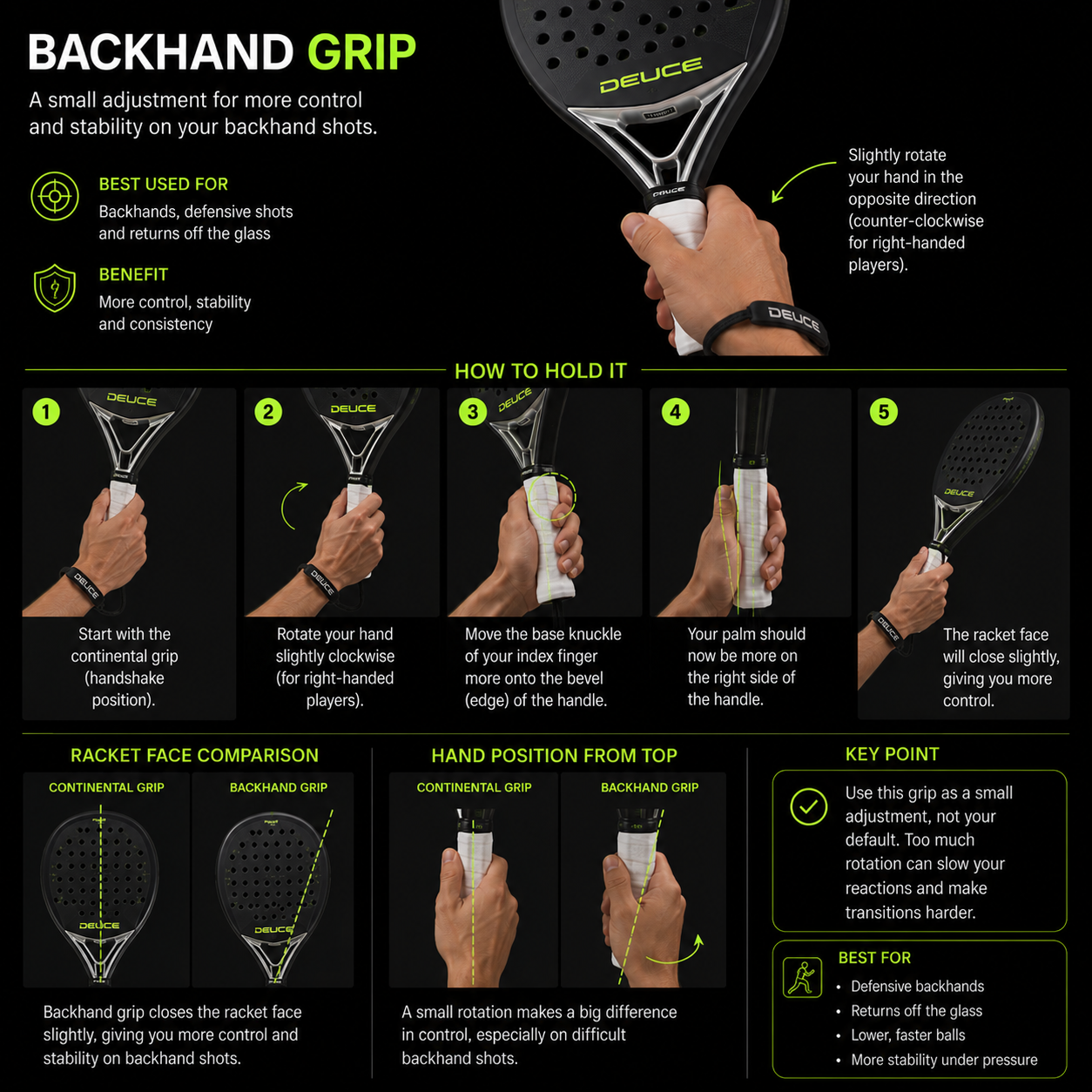
The backhand grip usually involves turning the hand slightly in the opposite direction to support stronger backhand contact.
This can help players control lower balls when defending near the back glass or returning difficult shots under pressure.
A stronger backhand grip often makes the racket face feel more stable, which can improve consistency on defensive shots.
However, the same rule applies here: small changes are better.
If the grip changes too much, it becomes harder to switch back quickly for the next shot. Since padel rallies move fast, staying close to the continental grip keeps your reactions sharper.
4- Serve Grip
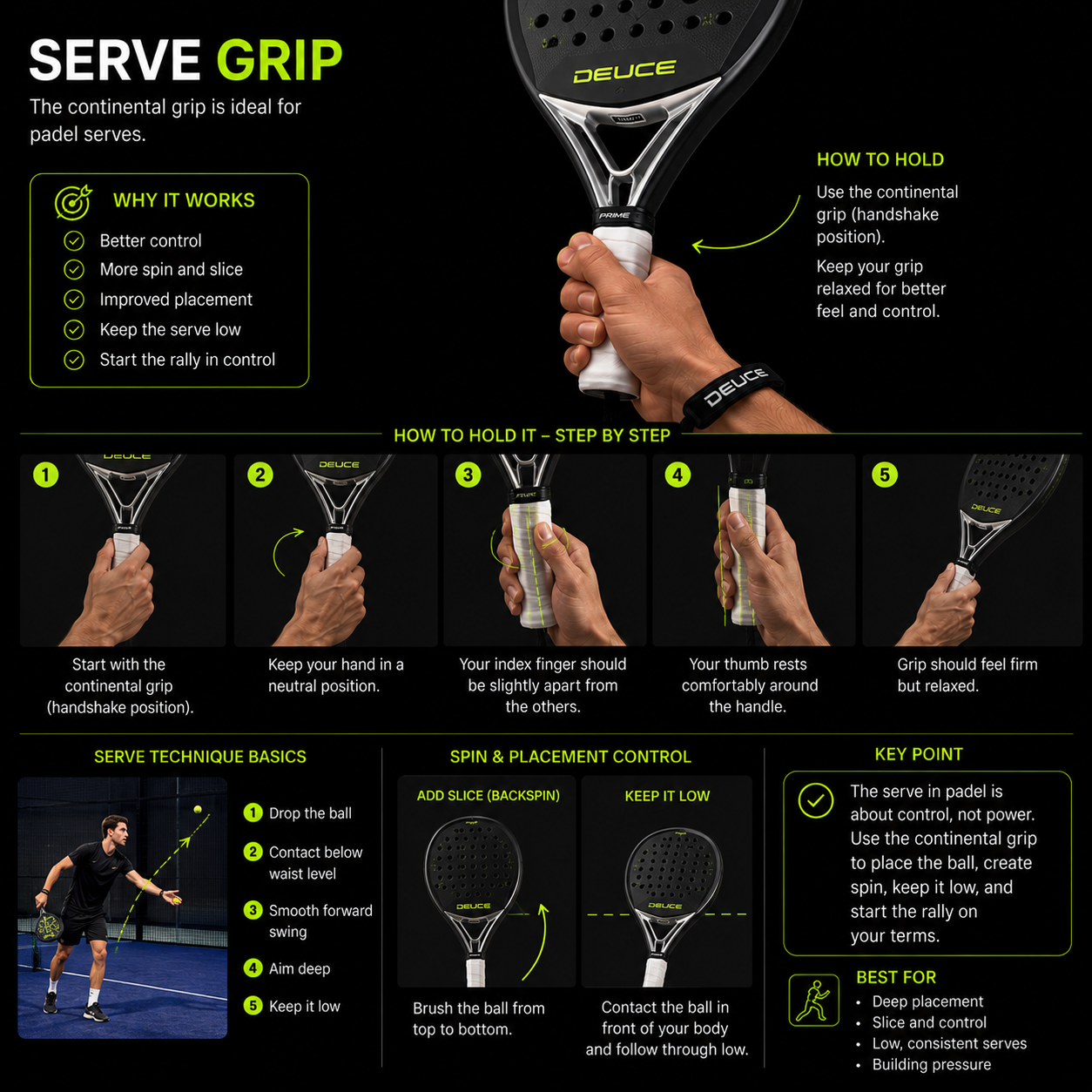
The serve grip in padel is usually the continental grip, since the underarm serve does not require a significant change in grip.
This grip provides better control over spin, placement, and height, all of which are important in padel serving. Unlike tennis, the padel serve is not about power. It is about setting up the point well. A good serve grip helps you:
- Place the ball deeper
- Add slice
- Keep the ball low
- Start the rally in control
For beginners, using the right serve grip makes serving feel more natural and consistent.
5- Volley Grip
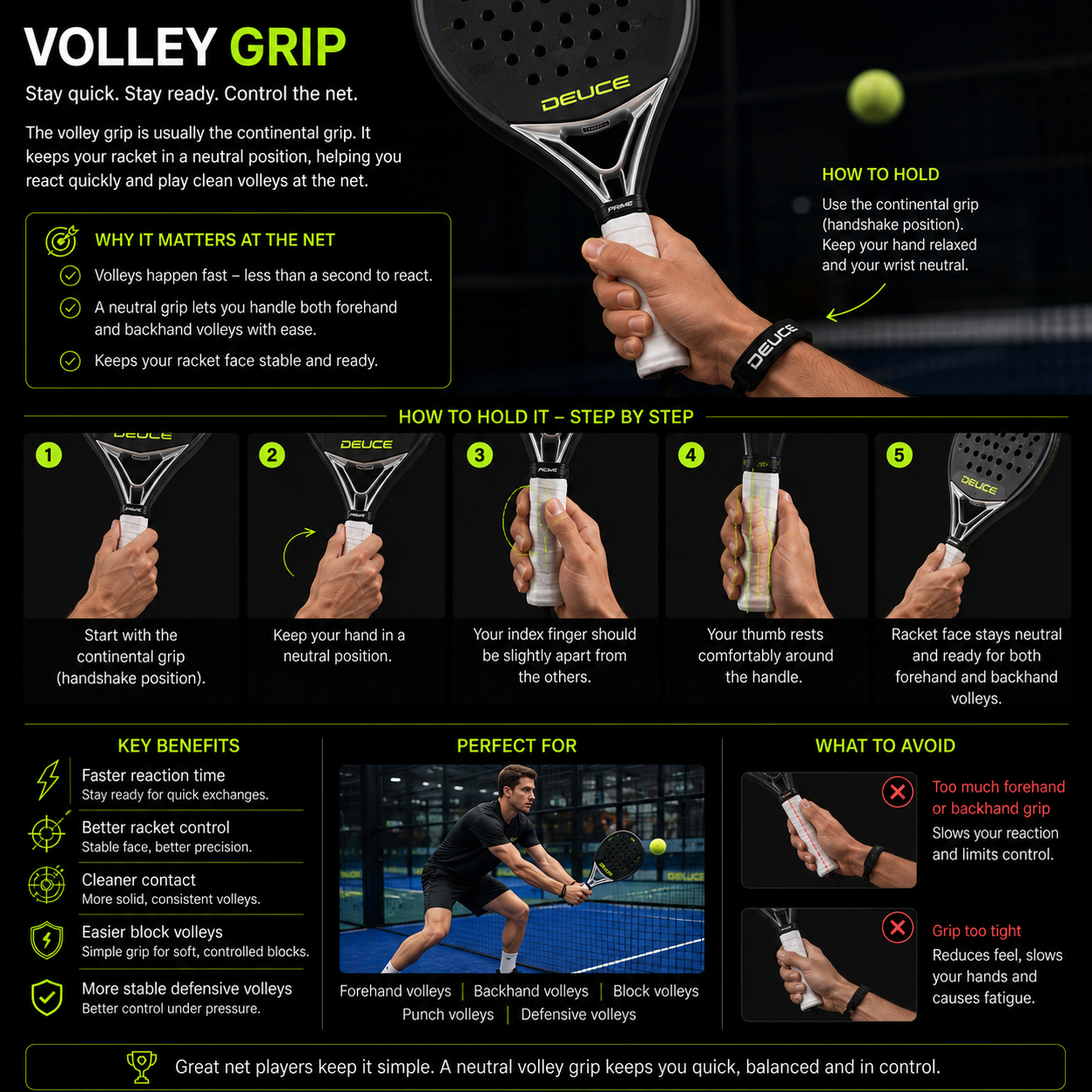
Volley grip is one of the most important parts of padel, as much of the game is played at the net.
In most cases, the volley grip is simply the continental grip because it keeps the racket ready in a neutral position. This matters because volleys are fast. You often have less than a second to react.
If your grip is too far into a forehand or backhand position, you may struggle to adjust quickly enough. A proper volley grip helps with:
- Faster reaction time
- Better racket control
- Cleaner contact
- Easier block volleys
- More stable defensive volleys
This is one reason experienced players dominate at the net. Their grip stays simple, stable, and ready.
5 Common Mistakes When Holding a Padel Racket
Learning to hold a padel racket is simple, but many beginners still develop bad habits early on.
1- Holding the Racket Too Tightly
This is one of the biggest beginner mistakes.
Many players squeeze the handle too hard, thinking it gives them more control.
In reality, it creates tension in the hand and wrist, which can reduce touch, slow reactions, and make shots feel stiff.
A good grip should feel firm but relaxed, allowing your wrist to move naturally.
2- Using a Tennis Grip
Players who come from tennis often use stronger forehand grips designed for topspin. But in padel, this can make volleys and defensive shots much harder.
Padel is faster and more compact, so staying closer to the continental grip usually gives better control and quicker reactions.
3- Wrong Wrist Angle
Your wrist should stay neutral when holding the racket.
If your wrist bends too much, the racket face can tilt, making shots harder to control. This often leads to mishits, weak volleys, or poor ball placement.
A relaxed wrist keeps the racket more stable.
4- Not Adjusting Grip During Points
While the continental grip is the base grip, small adjustments still matter.
Some beginners keep the exact same grip for every shot, which can make smashes, lobs, or defensive returns less effective. Small changes can improve control without slowing you down.
5- Poor Ready Position
Grip is only part of the picture. Your ready position matters too.
If your racket is too low or your hands are not set, your reaction time becomes slower. Keeping the racket up in front of you makes it easier to prepare and use the correct grip for the next shot.
Ready to Improve Your Padel Game?
No matter if you are new to padel or trying to improve your technique, learning the correct grip is one of the most important foundations of your game.
At Deuce Padel, you can train on nine premium indoor courts, learn from experienced coaches, and play in one of the North-West’s biggest indoor padel venues.
Book now via PLAYTOMIC and start improving your game today.

No Comments